This guide covers everything you need to know about centre bearing noise: what it sounds like, what causes it, when to replace, and what happens if you don’t.
What Is a Centre Bearing and What Does It Do?
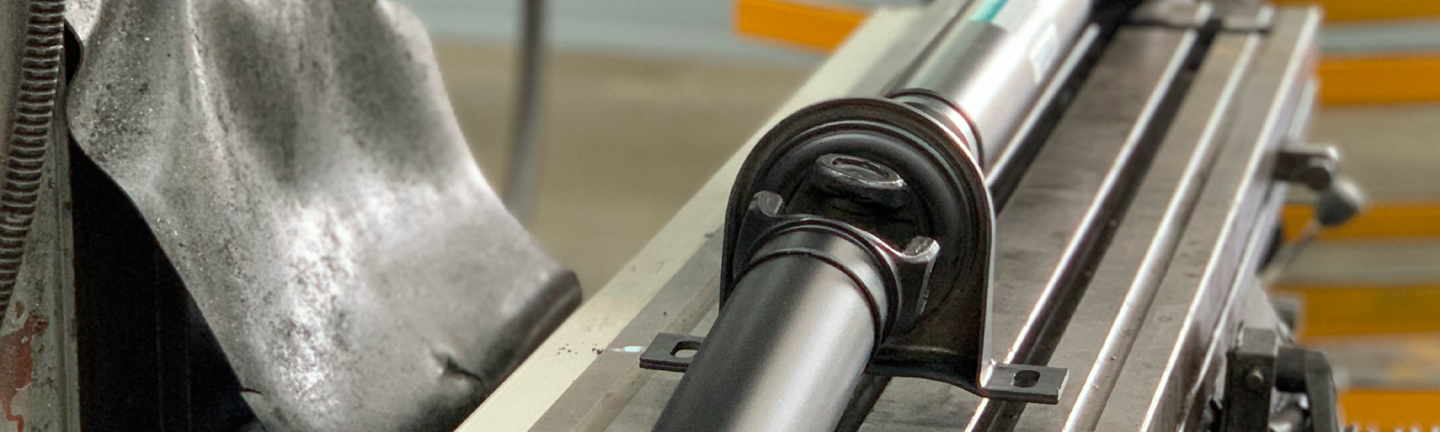
In any vehicle or piece of machinery with a two-piece driveshaft, including most rear-wheel-drive utes, four-wheel drives, trucks, and a wide range of industrial equipment, the centre bearing is the component that holds the middle of the driveshaft in place.
Without it, the driveshaft would flex and rotate unevenly, creating vibration, accelerating wear, and placing excessive stress on surrounding components. The centre bearing typically consists of a sealed ball or roller bearing pressed into a rubber-mounted bracket. The rubber acts as a vibration dampener, cushioning the driveshaft from the chassis and absorbing the forces generated when you’re driving at speed.
What Does a Failing Centre Bearing Sound Like?
Noise is usually the first indication that something is wrong, so keep an ear out for these specific sounds to help narrow down the diagnosis:
Howling or squealing on acceleration: A worn or dry centre bearing will often produce a high-pitched howl or squeal when the vehicle accelerates from a standstill, which may quieten as you go faster and load on the bearing shifts.
Grinding or rumbling at speed: A continuous grinding or rumbling noise that comes and goes as you speed up often points to internal bearing wear. The sound may be most noticeable within a specific speed range and fade above or below it.
Clunking or knocking under load: More severe deterioration can cause a clunking sensation, particularly during acceleration or deceleration, indicating the driveshaft is moving in ways it shouldn’t.
A vibration that accompanies the noise: In most cases, noise and vibration go hand in hand with centre bearing failure. You may feel a shudder through the floor, seat, or steering column that worsens with speed or load.
The exact sounds you’ll hear vary by vehicle type and application. For example, a 4WD on uneven dirt roads may have symptoms that feel different to what you’ll experience on a highway truck running fully loaded.
Common Causes of Centre Bearing Failure
Understanding why centre bearings fail helps with both diagnosis and prevention, saving you from costly unplanned downtime.
- Rubber deterioration: The rubber mount surrounding the bearing will wear over time, and it’s vulnerable to heat and oil contamination. As it degrades, it loses its ability to dampen vibration, allowing metal-to-metal contact and accelerated bearing wear. Cracking or visible deterioration of the rubber housing is a clear warning sign.
- Lack of lubrication: While many centre bearings are factory-sealed and require no routine greasing, some applications use bearings that need periodic lubrication. Across industrial and mining settings, lubrication-related failure is widely cited as a leading cause of premature bearing breakdown.
- Contamination: Dirt, dust, water, and debris entering the bearing housing create an abrasive environment that grinds away at bearing surfaces and accelerates failure. Vehicles operating in harsh Australian conditions are especially susceptible.
- Heavy load and high vibration: Vehicles and machinery operating under consistent heavy loads or on rough terrain place additional stress on the centre bearing. The constant vibration and load cycling shortens service life compared to light-duty on-road applications.
- Driveshaft misalignment: Incorrect reinstallation after servicing or suspension modifications that alter driveshaft angles can place the bearing under uneven load, leading to premature wear and noise even in a new component.
- Age and mileage: Centre bearings are heavy-duty components designed for long service life, but they don’t last forever. High-mileage vehicles will eventually need replacement.
Can You Keep Driving with a Noisy Centre Bearing?
Not without risk. A centre bearing that’s already making noise is already failing. The longer it’s left, the more load transfers to adjacent driveline components, all of which are more expensive to replace than the bearing itself. And aside from the expense, a driveshaft failure while in motion presents a genuine safety hazard. If you’re working with vehicles in remote locations far from support infrastructure, a bearing failure mid-shift also means unplanned downtime that eats into margin fast.
Getting it replaced as soon as symptoms appear is almost always the safer and more economical option.
When to Replace a Centre Bearing
There’s no universal kilometre interval for centre bearing replacement. Service life varies considerably depending on vehicle type, application, load, and operating conditions. However, you might need a replacement when:
- Howling, grinding, or clunking noise is present under the vehicle
- Vibration through the driveline that wasn’t there previously
- The rubber mount shows visible cracking, sagging, or deterioration
- Play or roughness is detected during manual inspection
- The bearing has been in service for an extended period in harsh conditions without inspection
For mining vehicles, agricultural machinery, and commercial transport fleets, it’s worth including centre bearing inspection in scheduled service intervals and proactively replacing them when wear is evident rather than waiting for symptoms to worsen.

Driveline's Centre Bearing Range
Here at Driveline, we stock a comprehensive range of centre bearings to suit everything from passenger cars and 4WDs to on-road trucks, mining haul vehicles, agricultural equipment, and rail and materials handling machinery. With over 40 years in the industry and 12 locations across Australia, our team is set up to support both quick turnaround replacements and more complex custom solutions.
Where an OEM part is no longer available or a non-standard application requires something purpose-built, our team can engineer a centre bearing solution matched to your specific driveshaft series, load requirements, and operating conditions. For operators who can’t afford extended downtime, having a trusted supplier with real stock and real capability matters.
Explore our centre bearing range or call 1300 374 835 to speak with a specialist today.
Driveline's Centre Bearing Range
How long do centre bearings last?
There’s no set replacement interval. Service life depends on the vehicle, load, operating conditions, and maintenance history. Vehicles working in demanding conditions will generally see shorter service life.
Is it safe to drive with a bad centre bearing?
Not recommended. A failing centre bearing can lead to further driveline damage, unpredictable handling, and in severe cases, driveshaft failure. Replacement should be arranged as soon as symptoms appear.
Can a centre bearing be repaired rather than replaced?
In most cases, replacement is the correct approach. Attempting to repair a worn or damaged bearing risks leaving the vehicle or equipment unreliable.
Does Driveline supply centre bearings for heavy machinery and mining vehicles?
Yes. Driveline’s range covers everything from light vehicles and 4WDs through to mining haul trucks, agricultural machinery, and rail equipment. Custom fabrication is also available for specialised or hard-to-source applications.