This guide breaks down the most common tailshaft noises, what’s likely causing each one, and when it’s worth pulling a vehicle off the road rather than pushing on.
What's Actually in a Tailshaft
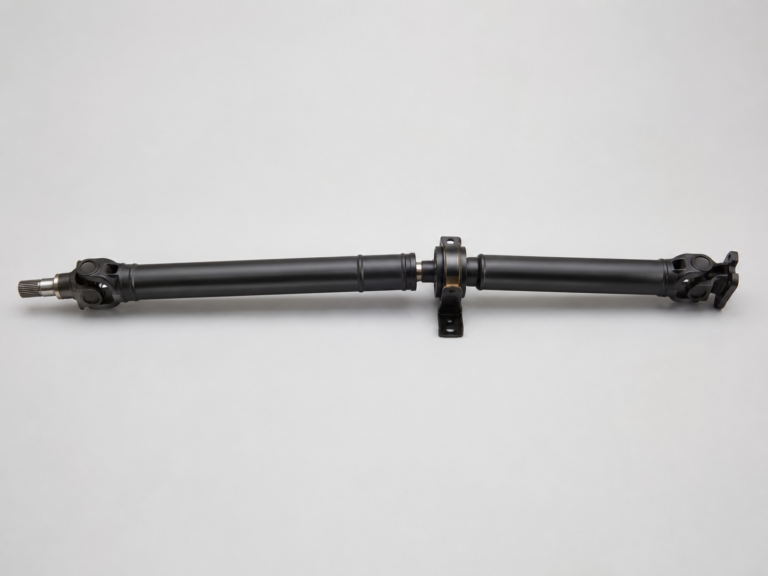
Most rear-wheel-drive and 4WD vehicles use a two-piece tailshaft (also called a driveshaft), split in the middle and supported by a centre bearing. Universal joints (U-joints) sit at each end of the shaft sections, allowing the tailshaft to flex slightly as the suspension moves. A slip yoke and splined section let the shaft change length slightly as the suspension travels.
Each of these components wears differently, and each tends to announce itself with a slightly different sound. That’s the key to diagnosing tailshaft noise without pulling everything apart first.
Match the Noise to the Cause
Clunking or knocking on acceleration or deceleration
This is one of the most common complaints, and it usually points to problems somewhere in the driveline, usually worn U-joints or a worn slip yoke and splines.
When there’s excess play, the tailshaft shifts slightly each time the load direction changes, and that shift is what you hear as a clunk.
Humming or droning at a particular speed range
A steady hum or drone that’s most noticeable within a specific speed band and fades above or below it is a classic centre-bearing symptom.
As the rubber mount around the bearing deteriorates, it loses its ability to dampen vibration, and the bearing itself starts to generate noise under load.
Vibration that builds with speed
Vibration that gets worse the faster you go often points to an out-of-balance or bent tailshaft.
This can happen after an impact, a poor reinstall following other driveline work, or simply over time from normal use.
Vibration on take-off at low speed
Shudders or vibrations that show up right as you pull away and settle once you’re moving are commonly a sign of driveline misalignment.
This is especially common after a suspension lift, where the operating angle of the tailshaft changes and puts uneven load through the U-joints and centre bearing.
Squealing or howling on acceleration
A high-pitched squeal or howl that comes on when you accelerate from a stop and goes away as you speed up usually means a dry or worn centre bearing.
Once the internal bearing surfaces start running without adequate cushioning, this is one of the first sounds you’ll hear.
Grinding or rumbling under load
A continuous grinding or rumbling noise tends to indicate more advanced bearing wear, often metal-to-metal contact where the rubber mount has broken down completely.
What's Actually Driving the Wear
The sounds above are just symptoms. The underlying causes are usually one or more of the following:
- Age and mileage: Every component in the driveline has a service life, and high-kilometre vehicles will eventually need replacement parts regardless of how well they’ve been maintained.
- Misalignment: Suspension modifications, lift kits, or a poor reinstall after other driveline work can leave the tailshaft operating at an angle it wasn’t designed for.
- Contamination: If you’re driving off-road or in rural conditions, all that dirt, dust, water, and grit can work its way into bearing housings and joints, accelerating wear.
- Heavy load and torque: Vehicles and machinery working hard under sustained load or on rough terrain place more stress on every driveline component than standard on-road use.
- Rubber deterioration: The rubber mount around the centre bearing hardens and cracks with heat and age, and once it can no longer dampen vibration properly, wear accelerates quickly.
Is It Safe to Keep Driving with a Noisy Tailshaft?
Not for long. Noise is an early warning sign, and by the time you can hear it, wear is already underway. The longer a worn U-joint, centre bearing or slip yoke is left in service, the more load gets transferred to the surrounding components, which are almost always more expensive to replace than the original part.
There’s also a safety concern. A tailshaft that fails while the vehicle is moving can affect steering, braking, and control, and, in a worst-case scenario, cause more extensive damage to the transmission or differential housing. If you’re running vehicles or machinery in remote locations, a failure mid-shift also means unplanned downtime that’s far more costly than a scheduled repair.
If you’re hearing any of the noises listed above, or it seems to be getting worse over a short period, treat it as a priority fix rather than something to monitor.
When to Get It Inspected
- Any new clunking, humming, squealing or grinding noise from underneath the vehicle
- Vibration through the floor, seat or steering wheel that wasn’t there previously
- Noise or vibration that’s appeared after a suspension modification or lift kit
- Visible cracking, sagging or deterioration in the centre bearing’s rubber mount
- Play detected in U-joints or the slip yoke during a manual inspection
- A tailshaft or driveline component that’s been in hard service without recent inspection
Driveline's Tailshaft and Driveline Component Range
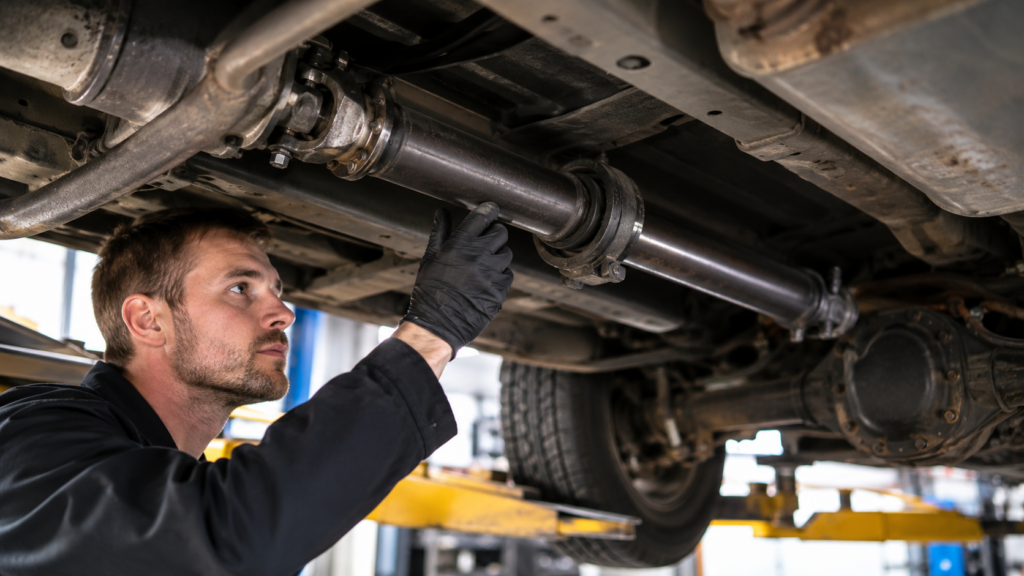
Driveline has spent over 40 years supplying underbody and power transmission components across Australia, from passenger vehicles and 4WDs through to trucks, agricultural machinery and mining equipment. Our range covers the components most commonly responsible for tailshaft noise, including centre bearings, U-joints, slip yokes and full tailshaft assemblies.
Where a standard part isn’t available or you need something purpose-built, our team can custom manufacture and balance a solution to your specifications. With 12 locations across Australia, there’s a good chance one of our branches is close enough to get you back on the road without extended downtime.
Explore our centre bearing range or contact us today to talk through a custom solution.
Frequently Asked Questions
What does a clunking noise from my tailshaft mean?
Clunking, especially on acceleration or deceleration, usually points to play in the driveline from worn U-joints or a worn slip yoke and splines.
Why does my tailshaft hum or drone at certain speeds?
A hum that’s most noticeable within a specific speed range and fades outside it is a common sign of centre bearing wear.
Can a worn centre bearing be repaired instead of replaced?
In most cases, replacement is the correct approach. Attempting to repair a worn bearing risks leaving the vehicle or equipment unreliable.
Does Driveline supply tailshaft components for trucks and heavy machinery?
Yes. Our range covers passenger vehicles and 4WDs through to trucks, agricultural equipment and mining vehicles, with custom fabrication available for specialised applications.